



How to Choose the Best RF Amplifier Manufacturer?
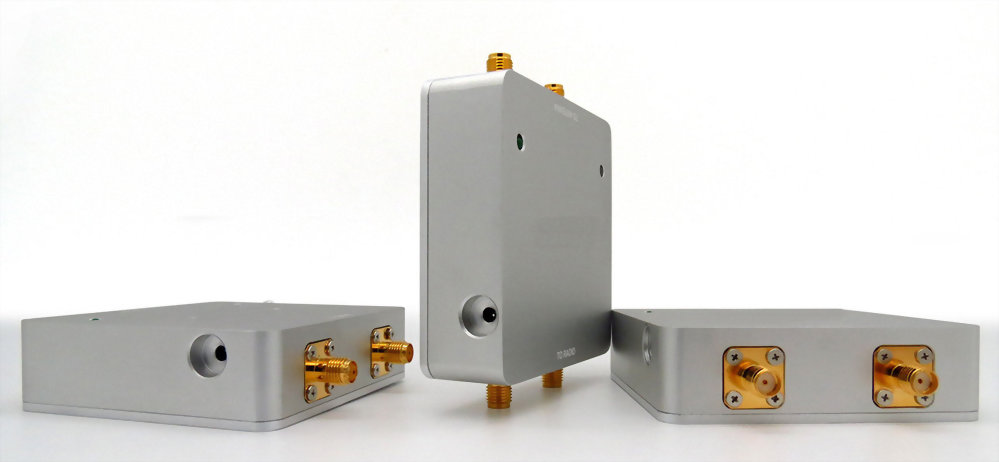
RF amplifiers play a critical role in wireless communication, signal transmission, testing systems, IoT devices, industrial applications, and other high-frequency environments. Whether the amplifier is used to strengthen weak signals, improve transmission distance, support RF testing, or integrate into a larger wireless system, its performance directly affects overall system stability.
For buyers, choosing the right RF amplifier manufacturer is not only about comparing product specifications. Frequency range, gain, linearity, noise figure, output power, thermal stability, and long-term reliability all depend on the manufacturer’s engineering capability and production control. A product that looks suitable on paper may still create performance issues if the manufacturer lacks RF design experience, reliable testing procedures, or the ability to support application-specific requirements.
This guide explains how to evaluate an RF amplifier manufacturer and what factors buyers should consider before selecting a long-term supplier.
Why Choosing the Right RF Amplifier Manufacturer Matters

RF amplifiers operate in demanding conditions where small performance variations can affect the entire communication or signal chain. If an amplifier delivers unstable gain, excessive noise, poor linearity, or inconsistent output power, the result may include signal distortion, reduced coverage, lower data reliability, or interference with other system components.
Unlike many standard electronic parts, RF amplifiers require careful design, material selection, circuit layout, impedance matching, heat management, and testing. The manufacturer’s technical capability has a direct impact on how the amplifier performs in real applications, not just in laboratory specifications.
For wireless communication, IoT infrastructure, signal boosters, industrial systems, and mission-critical equipment, reliability is especially important. A weak or unstable amplifier may cause more than a product failure. It may affect system uptime, user experience, compliance, and long-term maintenance cost. This is why buyers should evaluate the manufacturer behind the product, not only the amplifier model itself.
Key Factors to Consider When Choosing an RF Amplifier Manufacturer
1. Design and R&D Capability
The first factor to evaluate is the manufacturer’s design and research capability. RF amplifier design requires more than assembling electronic components. It involves RF circuit design, impedance matching, gain control, noise reduction, linearity optimization, and thermal management.
A strong RF amplifier manufacturer should have in-house R&D capability and engineering experience across different frequency ranges and application environments. This is especially important when the amplifier needs to be integrated into a larger system, such as a signal booster, handheld communication device, IoT gateway, wireless infrastructure, or test equipment.
Buyers should look for manufacturers that can explain design trade-offs clearly. For example, increasing output power may affect heat generation, while optimizing low-noise performance may require careful component selection and layout control. A capable manufacturer can help buyers choose the right balance instead of simply recommending the highest specification.
2. Manufacturer Experience and Field Performance
Experience matters because RF products often behave differently in real-world conditions than they do in isolated specification sheets. A manufacturer with years of RF experience is more likely to understand practical issues such as environmental noise, signal loss, power fluctuation, antenna matching, enclosure effects, and installation constraints.
When evaluating a supplier, buyers should consider whether the manufacturer has experience with similar applications. An RF amplifier used in industrial environments may face different requirements from one used in consumer wireless devices or signal boosting systems. Field-proven performance gives buyers more confidence that the amplifier can operate consistently after deployment.
An experienced manufacturer can also provide better support during the product selection stage. Instead of only asking for a frequency range and output power requirement, the engineering team should help clarify the operating environment, integration method, signal conditions, and performance expectations.
3. Frequency Range and Application Support
Frequency range is one of the most important specifications for any RF amplifier. However, selecting the right product is not only about whether the amplifier covers the required frequency band. Buyers should also consider gain stability, linearity, noise figure, output power, efficiency, and performance consistency across the operating range.
For communication and IoT applications, stable gain and low-noise design can help maintain signal quality. For signal boosters or wireless systems, linearity is important because poor linearity may introduce distortion or unwanted interference. For high-frequency or specialized applications, the manufacturer must understand how design choices affect performance at different bands.
A reliable RF amplifier manufacturer should be able to support a variety of frequency requirements and application scenarios. This includes standard amplifier products as well as application-specific modifications when a standard model does not fully meet the project’s requirements.
4. Production Quality and Certification Standards
RF amplifier performance depends heavily on consistent production quality. Even a well-designed circuit can fail to perform reliably if assembly, component sourcing, soldering, testing, or packaging is poorly controlled.
Buyers should evaluate whether the manufacturer follows recognized quality standards and whether the products comply with relevant requirements such as ISO-based quality management and RoHS material compliance. These standards help indicate that the company has defined production controls and responsible material management practices.
Reliability testing is also important. RF amplifiers may operate for long periods under heat, power load, and environmental variation. A manufacturer should be able to verify durability, electrical performance, and production consistency before shipment. Quality assurance should not only happen at the final inspection stage. It should be built into the full process, from incoming components to assembly, testing, packaging, and after-sales support.
5. Customization and Application Support
Many RF amplifier projects cannot be solved with a completely standard product. Different industries may require different frequency coverage, housing design, connector type, power output, control interface, or integration method.
A capable RF amplifier manufacturer should be able to provide customization support for different industries, including wireless communication, IoT, industrial systems, handheld devices, signal boosters, and complex RF systems. OEM and ODM capability is especially valuable when buyers need amplifiers that fit into their own branded products or system designs.
Customization is most effective when the manufacturer joins the project early. By discussing the application from the initial inquiry stage, the engineering team can help identify feasible options, clarify limitations, and simplify system integration. This reduces the risk of selecting an amplifier that technically works but does not fit the final product design or operating environment.
6. Supply Chain and Delivery Capability
For buyers sourcing RF amplifiers for production or system deployment, supply reliability is just as important as technical performance. A manufacturer should be able to support stable production, predictable delivery, and consistent product quality over time.
Supply chain capability includes component sourcing, production planning, inventory control, packaging, logistics, and global shipping coordination. For companies that serve international markets, the ability to deliver consistently can affect project launch schedules, installation timelines, and customer satisfaction.
Buyers should also consider whether the manufacturer can support both small development quantities and future mass production. A supplier that can scale from prototype support to stable volume delivery is often more valuable than one that only provides off-the-shelf products without long-term production planning.
FAQs
Q1. Why is manufacturer experience important when choosing an RF power amplifier?
A reliable RF amplifier manufacturer offers more than product specifications. Years of engineering experience, field-proven performance, and strict quality control help ensure that the amplifier performs consistently in demanding environments.
At APM, we leverage decades of experience in RF technology to deliver dependable amplifiers for industrial, wireless communication, and mission-critical applications. Our experience helps customers evaluate not only frequency and power requirements, but also real-world operating conditions, integration needs, and long-term reliability.
Q2. Can APM customize RF power amplifiers for specific applications?
Yes. APM can customize RF power amplifiers based on customer requirements through in-house R&D and a professional engineering team. We support customization for amplifiers and relays used in handheld devices, signal boosters, and complex wireless systems.
Some customers require custom frequency coverage for signal booster applications, while others need design adjustments for system integration. By working with customers from the initial inquiry stage to production, we help clarify options, simplify design integration, and ensure that the final solution matches the application.
Q3. What quality assurance and after-sales support does APM provide?
Quality is a top priority at APM. From production in our Taiwan factories to final packaging, we apply strict quality control at every stage. This helps ensure consistent performance, reliable operation, and dependable delivery for customers.
Our after-sales support includes installation support, product training, ongoing technical assistance, maintenance, and spare parts. We understand that system reliability matters, so we remain committed to helping customers keep their equipment operating smoothly after purchase.
Your Trusted RF Amplifier Manufacturer

Choosing the right RF amplifier manufacturer requires more than comparing frequency range and output power. Buyers should evaluate the manufacturer’s R&D capability, RF design experience, application support, quality control, customization ability, and delivery reliability. These factors directly influence system stability, signal quality, long-term performance, and maintenance cost.
At APM, we support customers with decades of RF technology experience, in-house R&D capability, Taiwan-based production, strict quality control, customization support, and reliable after-sales service. We understand that every RF application has different requirements, from wireless communication and IoT systems to signal boosters and mission-critical equipment.
As an RF amplifier manufacturer, we help customers identify suitable solutions, clarify technical options, customize products when needed, and support stable production from development to deployment. If you are looking for a dependable RF amplifier partner for your next project, we welcome you to explore our RF amplifier solutions and contact our team for consultation.