



What Is an RF Amplifier? Wireless Coverage Explained

Reliable wireless coverage keeps people, devices, and systems connected across homes, workplaces, public spaces, and industrial environments.
However, a wireless connection can become less reliable as radio-frequency (RF) signals lose strength while traveling through air, cables, and connectors. Distance and physical obstacles can further weaken these signals, causing poor reception, unstable connections, or coverage gaps.
RF amplifiers help address this problem by increasing signal power at the appropriate point in the RF chain. But what exactly is an RF amplifier, and how does it improve wireless coverage?
This article covers everything you need to know about RF amplifiers, from how they work to their benefits, design considerations, and applications.
What Is an RF Amplifier?

An RF amplifier is an electronic device that increases the power of a radio-frequency signal. It receives a weak input and produces a stronger output for long-distance transmission or for driving a load, most commonly an antenna.
The additional power helps compensate for signal loss caused by cables, connectors, distance, and physical obstacles, allowing the signal to be usable over a longer distance and a wider area.
However, an RF amplifier doesn't generate a new signal or information. It only strengthens the existing signal so that it can better withstand attenuation during transmission.
How Does an RF Amplifier Work?
An RF amplifier accepts a low-power RF signal and uses energy from an external DC power supply to produce a stronger output signal. Inside the amplifier, transistors respond to the incoming waveform, increasing its amplitude while preserving the information it carries.
Correct selection, configuration, and placement within the RF chain are essential. An unsuitable amplifier or one pushed beyond its intended operating range can distort the signal, create unwanted frequencies, and reduce communication quality instead of improving it.
Main Types of RF Amplifiers
RF amplifiers can be grouped according to:
- Installation Environment (Indoor/Outdoor):
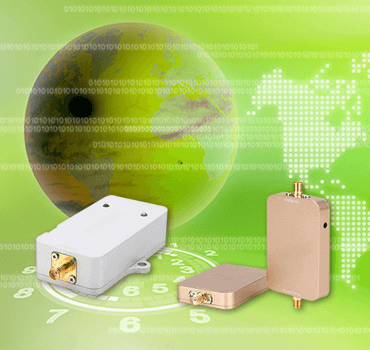
Indoor amplifiers typically use lighter enclosures because they operate in protected, temperature-controlled locations such as homes and offices. Outdoor models are installed in exposed areas such as rooftops and parking lots, so they need durable, weather-resistant enclosures and effective heat dissipation.
- Frequency and Bandwidth (Narrowband/Wideband):
Narrowband models operate within a specific band, such as 2.4 GHz or 5.8 GHz, while wideband models cover a wider range. Custom ranges are also available for specialized applications.
- Output Power Level:
Higher-power models can support longer-distance transmission but generally consume more energy and generate more heat. Lower-power models require less energy and cooling, which may make them more suitable for shorter-range applications.
Key Benefits of RF Amplifiers
When correctly integrated into a wireless system, an RF amplifier can improve the reach, reliability, and quality of a wireless connection in many ways:
1. Stronger Signals and Longer Transmission Distances
A wireless signal loses power as the distance between the transmitter and receiver increases. An RF amplifier raises the signal’s power before transmission, allowing it to withstand more loss during transmission.
By helping the signal reach the receiver at a usable level, amplification can extend the effective range of a wireless link so devices stay connected over greater distances.
2. Reduced Effects of Signal Loss and Interference
Signal loss occurs through cables, connectors, walls, and other parts of the transmission path. An amplifier placed at the right point preserves the link’s signal margin.
However, an RF amplifier cannot remove interference. It can compensate for attenuation and help maintain a usable signal level, but it may also amplify any interference already present at its input.
3. More Stable Reception and Better Signal Quality
Incoming RF signals may be too weak for a receiving device to detect and process reliably. A low-noise RF amplifier strengthens the incoming signal while minimizing the noise it adds.
By preventing further degradation early in the receiver chain, it helps preserve signal quality and allows the receiver to recover transmitted information more consistently.
4. Support for Long-Range and Complex Environments
In large or complex environments, such as large buildings, outdoor sites, and industrial facilities, an RF amplifier can provide the additional signal power needed to maintain coverage across these areas.
It can also support point-to-point links between two locations or point-to-multipoint systems connecting several remote sites.
Key Considerations in RF Amplifier Design
A reliable RF amplifier design balances the following factors:
1. Gain
Gain measures how much an amplifier increases the input signal’s power and is typically expressed in decibels (dB). The required gain should match the incoming signal level, transmission losses, and target output.
2. Linearity
Linearity describes how accurately an amplifier’s output follows its input. Sufficient linearity allows the amplifier to reproduce the input signal at a higher power level without changing its original waveform. Poor linearity introduces distortion, reducing signal integrity and limiting the value of additional output power.
3. Noise Figure
Noise figure indicates how much additional noise an amplifier introduces into the signal. Choose a low-noise-figure amplifier for weak received signals, as excessive added noise can mask the desired signal and reduce receiver sensitivity.
4. Frequency Range
Frequency range is the span of frequencies over which an amplifier can perform effectively. The design must cover the system’s full operating band, such as the 2.4 GHz or 5.8 GHz ISM band, or a custom range required by a specialized application.
5. Output Power
Output power, measured in watts or dBm, affects the strength and potential range of the transmitted signal. Choose the required output power level based on the transmission distance, antenna gain, signal losses, and receiver sensitivity.
6. Thermal Management
An RF amplifier converts part of the electrical power it consumes into heat, especially at high output levels. Proper thermal design helps move heat from the amplifier through the circuit board and enclosure before dissipating it through heat sinks or airflow. This keeps the internal temperature within its limit and extends service life.
7. Application Requirements
An amplifier design should account for the intended operating environment, range, data needs, antenna setup, power source, and regulatory limits. A longer range may require more output power, while portable equipment prioritizes low energy use, compact size, and efficient thermal performance.
8. Impedance Matching and Stability
Impedance affects how RF power moves between the amplifier and other components. Impedance matching prevents part of the RF signal from bouncing back toward the amplifier instead of reaching the next component. The amplifier must also remain stable under changing conditions to avoid unwanted oscillation and signal distortion.
Common Applications of RF Amplifiers
RF amplifiers support a wide range of wireless systems, including:
- Wireless Base Stations and Network Equipment: Support wireless transmission, extend coverage, and maintain dependable network connections.
- IoT and Smart-City Systems: Help connected sensors and infrastructure transmit data reliably across required distances.
- Wireless Surveillance and Security Systems: Maintain stable links for cameras, alarms, and remote sensors.
- Aviation and Specialized Communications: Strengthen communication and extend control for aircraft and unmanned aerial vehicles.
- Long-Range Wireless Transmission Equipment: Provide the signal power needed for point-to-point and point-to-multipoint systems connecting remote locations.

FAQs
Q1. What are RF power amplifier modules?
RF power amplifier modules are integrated solutions that combine components required for RF amplification, such as amplification stages, impedance-matching networks, and biasing circuits.
Q2. How can RF power amplifier modules simplify PCB design?
Integrated modules require less printed circuit board (PCB) space than separate components. They also simplify board layout and reduce RF-routing complexity.
Q3. What are the benefits of eliminating discrete matching networks?
Eliminating separate matching-network components reduces the component count, bill-of-materials cost, and assembly time. It also improves transmitter reliability by reducing the number of individual connections and potential failure points.
Q4. How do RF power amplifier modules improve efficiency in wireless applications?
Some modules use technologies such as gallium nitride (GaN) or gallium arsenide (GaAs) to achieve high power-added efficiency, including at millimeter-wave frequencies. This can improve RF performance while limiting unnecessary power consumption.
Q5. What built-in protections can RF power amplifier modules include?
Depending on the model, modules may include overvoltage, overtemperature, and electrostatic-discharge protection to prevent damage and support reliable operation under challenging conditions.
Improve Wireless Coverage with APM RF Amplifiers
RF amplifiers help strengthen wireless signals, compensate for transmission losses, and improve coverage and connection stability. However, choosing the right amplifier requires considering factors such as frequency, gain, output power, linearity, noise, thermal performance, and application requirements. With proper RF amplifier design and integration, manufacturers can build more reliable and efficient wireless communication systems for various applications.
With decades of R&D experience in RF transmission devices, APM offers RF solutions for a wide range of wireless applications.
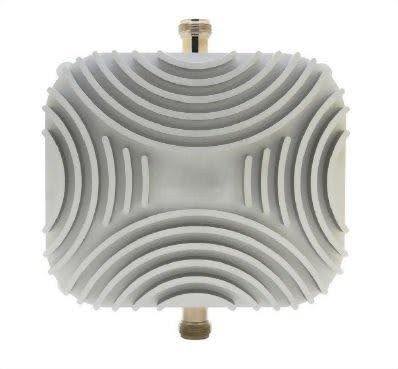
Our 10W 5.8 GHz 40 dBm Outdoor WiFi Signal Booster, for example, operates from 5000 to 5875 MHz and provides 15–18 dB transmit gain. It’s designed for supermarkets, parking areas, offices, and point-to-point or point-to-multipoint projects.
Whatever your coverage needs, APM can help you find an amplifier suited to your system’s frequency, power, and operating environment.
Explore our products or contact us to discuss your requirements.